
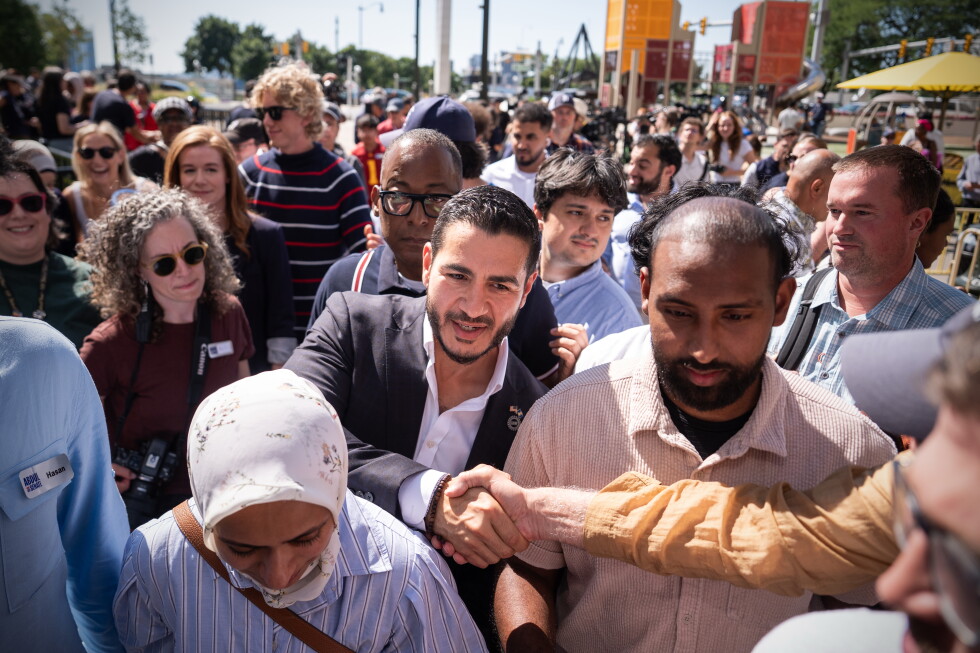
In a stunning upset that signals a shift in the Democratic party’s internal dynamics, Abdul El-Sayed has won the Michigan U.S. Senate primary. The former public health official narrowly defeated Representative Haley Stevens in a race that remained undecided until early Wednesday morning, decided by fewer than 15,000 votes out of more than 1.5 million cast. Standing before the iconic Spirit of Detroit statue, El-Sayed invoked the legacy of Muhammad Ali, claiming his victory helped shake up the world and provided a voice for voters frustrated with the party establishment.
The win marks a remarkable political comeback for El-Sayed, who spent years in what some described as the political wilderness after a crushing loss in the 2018 gubernatorial primary. Without ever holding elected office, he built a grassroots powerhouse fueled by digital media and an uncompromisingly progressive platform. To secure the nomination, he had to overcome more than 60 million dollars in outside spending and opposition from heavyweights within his own party, including Senate Democratic Leader Chuck Schumer and outgoing Senator Gary Peters.
Senator Bernie Sanders hailed the result as one of the most extraordinary victories in modern American politics, noting that El-Sayed successfully turned a shoestring operation into a statewide movement. Starting with a tiny staff of four and speaking to rooms of just five people in the early days of his campaign, El-Sayed leaned into unconventional media strategies and high-energy outreach across 110 different cities to mobilize young voters and activists.
Despite the triumph, El-Sayed now faces the immediate challenge of healing deep divisions within the Michigan Democratic party before heading into a general election against Republican Mike Rogers. With control of the Senate hanging in the balance, this battleground state becomes an essential testing ground for whether a progressive vision can translate from a primary victory into success in November. For now, however, El-Sayed is celebrating what he describes as a victory of movements over money.