Greg Abel‘s first quarter running Berkshire Hathaway‘s equity portfolio produced one of the most dramatic reshuffles the conglomerate has seen in over a decade.
The new CEO initiated or significantly expanded positions in five stocks while dumping 16 others, shrinking total holdings from 42 to just 29 in a single quarter.
That overhaul touched every corner of the $263 billion equity portfolio, with Abel buying $15.9 billion worth of stocks and selling $24.1 billion overall.
Berkshire’s first quarter 2026 13F filing, submitted to the Securities and Exchange Commission on May 15, revealed the full scope of the changes.
Abel’s five Berkshire picks span AI to airlines and deep-value retail
The five new or significantly expanded positions covered Alphabet, Delta Air Lines, Macy’s, The New York Times, and homebuilder Lennar, creating surprisingly broad sector exposure.
Alphabet commanded the most capital, as Abel more than tripled Berkshire’s stake to roughly 58 million shares across both Class A and Class C stock. That combined position was worth about $16.6 billion at the end of the first quarter.
Buffett once admitted to missing the opportunity to invest in Google early, and Abel’s aggressive accumulation marks a decisive departure from that history, Forbes noted.
“I didn’t know enough about technology to know whether this really was the one that would stop the competitive race,” Buffett said.
Delta Air Lines marks a reversal of Buffett’s pandemic-era airline exit
Delta was arguably the most surprising addition, given Buffett’s famously painful experience with airline stocks that ended in a pandemic-era fire sale in 2020, CNBC reported.
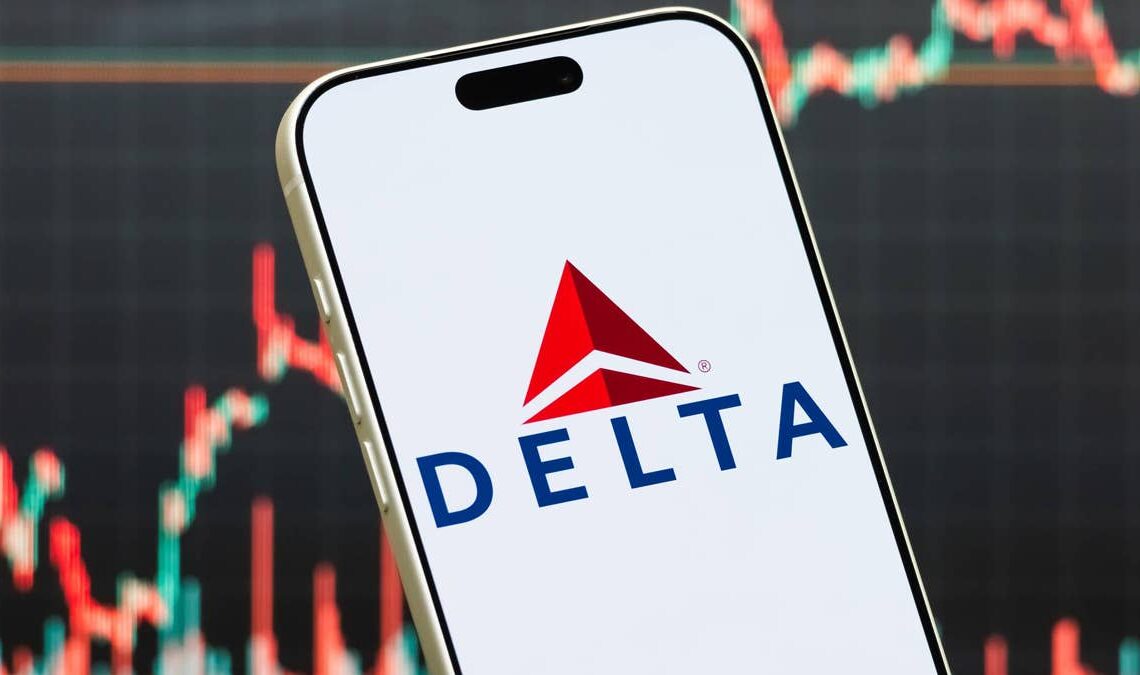
Berkshire acquired 39.8 million shares of Delta worth $2.6 billion, making it one of the carrier’s largest shareholders at 6.1% of outstanding shares, according to the 13F filing.
More Warren Buffett:
- Buffett’s $400 billion war chest stays on the sidelines
- Warren Buffett has a message on energy prices for all Americans
- Warren Buffett’s Berkshire sends jarring signal to stock buyers
Delta Air Lines had posted annual profits every year since 2022, giving Abel confidence that the airline industry’s recovery after the pandemic is likely to continue.
The remaining three picks targeted different corners of the market, each reflecting a distinct investment thesis underneath Abel’s umbrella of value discipline.
Berkshire tripled its New York Times stake to 15 million shares worth $1.3 billion and boosted Lennar to 10 million shares valued at $877 million.
Macy’s accounted for the smallest new investment, with $55 million representing less than 0.1% of Berkshire’s total $263 billion equity portfolio.
Cheng Xin/Getty Images
Copying Berkshire’s stock picks carries hidden risks for individual investors
The size and structure of Berkshire Hathaway allow it to deploy capital in ways that differ significantly from what individual investors can achieve.
Berkshire commands a $263 billion equity portfolio backed by over $397 billion in cash and short-term Treasury bills and dozens of wholly owned operating businesses generating steady earnings, the Berkshire’s first quarter earnings showed.
That financial depth lets Abel absorb short-term price swings without any external pressure to sell, a luxury most individual investors do not have.
David Kass, clinical professor of finance at the University of Maryland’s Robert H. Smith School of Business, told CNBC after the 2026 annual meeting that Abel’s background as a corporate operator gives him a fundamentally different decision-making framework.
“Greg demonstrated the knowledge of and passion for running all of Berkshire’s businesses. His main focus is on operations. By contrast, Buffett focuses more on the investment side of Berkshire,” Kass said.
Abel also derives information advantages from running Berkshire’s operating subsidiaries that extend well beyond what a regulatory filing can reveal to outside observers.
Vitaliy Katsenelson, CEO of Investment Management Associates, argued in Fortune that Berkshire now needs an operator more than another capital allocator, and that Abel is positioned to improve the operating businesses Buffett left largely untouched.
What Abel’s concentrated portfolio means for Berkshire going forward
Abel’s early moves suggest a leader willing to break from convention while maintaining the value discipline Berkshire has followed for six decades.
The portfolio became meaningfully more concentrated, with the top 10 holdings now representing roughly 91% of total portfolio value and only 29 positions remaining.
Berkshire applies identical capital discipline to its equity portfolio and its operating businesses, Abel wrote in his annual shareholder letter.
The enlarged Alphabet position marks Berkshire’s most assertive technology bet since Apple, and the Delta stake reverses Buffett’s pandemic-era exit from airlines, a sector he described in 2020 as having been fundamentally altered by the pandemic.
Given the structural differences between Berkshire and individual accounts, Abel’s selections may function more as research leads than a ready-made stock shopping list, Katsenelson noted.
The 13F filing reveals what Berkshire owned at the end of March, not what it holds today, because a multi-week reporting lag applies. By the time that data reaches public view, stock prices and portfolio weightings may have already shifted in meaningful ways.
Berkshire’s capital base, time horizon, and risk tolerance differ so fundamentally from individual household portfolios that identical picks can produce vastly different outcomes.
Related: Warren Buffett’s successor Greg Abel makes another $10 billion bet