
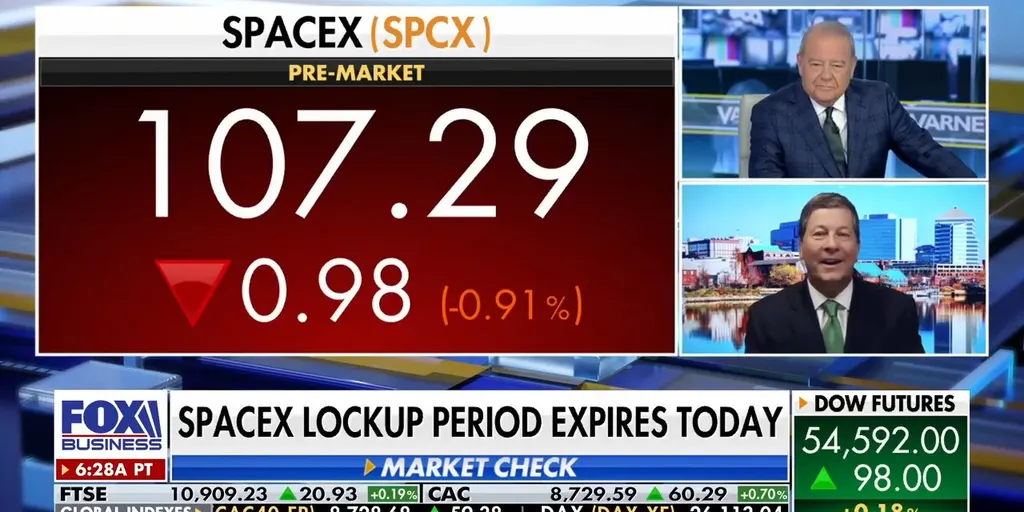
Despite the inherent turbulence of the private aerospace sector, one prominent market expert is urging investors to look past short term swings and consider the long term potential of SpaceX. Speaking recently about the company’s trajectory, the analyst argued that while the venture carries significant risk, its dominance in satellite deployment and reusable rocket technology creates a moat that few competitors can breach. The argument centers on the idea that stability is rarely found in industries pushing the boundaries of physics, but those who weather the volatility often reap the highest rewards.
The push for increased investment comes at a time when SpaceX continues to scale its Starlink constellation, effectively turning a launch company into a global internet provider. According to the expert, this diversification provides a critical safety net that offsets the unpredictable nature of deep space exploration and government contracts. By creating a recurring revenue stream from consumer data services, SpaceX has shifted its financial profile from a speculative bet on moon shots to a scalable infrastructure play.
However, critics remain wary of the concentration of power within Elon Musk’s leadership and the sheer capital intensity required to maintain such an ambitious roadmap. The volatile nature of these investments means that liquidity remains low compared to public stocks, making it a game primarily for institutional players or high net worth individuals. Despite these hurdles, the consensus among bulls is that missing out on the privatization of orbital logistics could be one of the biggest missed opportunities of the decade.
Ultimately, the case for investing in SpaceX rests on whether one views current fluctuations as warning signs or merely growing pains. For those following the advice of this market strategist, the noise of daily volatility is irrelevant compared to the strategic goal of becoming Earth’s primary gateway to other planets. As launch frequencies increase and costs per kilogram drop, the prospect of astronomical returns seems more plausible than ever before.