
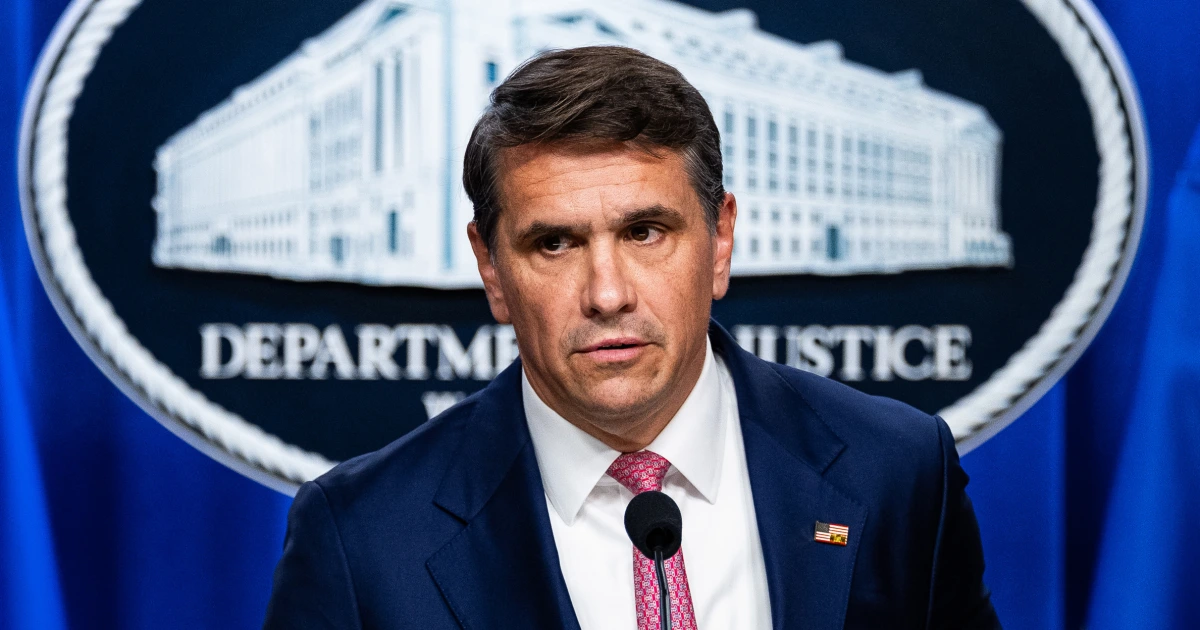
New Mexico’s attorney general has launched a federal lawsuit against the U.S. Justice Department and acting Attorney General Todd Blanche, claiming the federal government is actively blocking a state investigation into sex crimes committed at Jeffrey Epstein’s former ranch. Filed in a Washington, D.C. court, the suit alleges that officials have stonewalled efforts by New Mexico Attorney General Raúl Torrez to uncover the full extent of abuses that occurred at the sprawling Zorro Ranch near Santa Fe. Torrez argues that this lack of cooperation harms victims and prevents the state from holding Epstein’s remaining associates accountable.
The legal battle comes alongside a scathing report from the state suggesting that federal prosecutors in New York neglected New Mexicans by prioritizing cases in Florida and the Virgin Islands while ignoring offenses on state soil. According to Torrez, his office has made ten separate requests for critical evidence and has been met with repeated denials or silence. He claims that while the Justice Department promises cooperation in public, the reality on the ground has been one of obstruction and concealment designed to hide information about Epstein and his co-conspirators.
In its defense, the Justice Department asserts that it cannot release certain materials due to federal court orders intended to protect the identities of victims. Officials stated that providing sweeping disclosures without a sufficient lawful basis would violate privacy protections. However, Torrez dismissed these concerns during an interview with NBC News, accusing the department of using survivors as a shield to avoid transparency. This sentiment was echoed by several Epstein survivors in a joint statement, who called the government’s privacy arguments laughable given how much personal information has already been leaked through previous releases.
At the heart of the dispute is a desire for complete access to investigative files, including a prosecution memo detailing an assault at Zorro Ranch involving a woman other than Ghislaine Maxwell. While Maxwell is currently serving twenty years for her role in Epstein’s network, Torrez believes more facilitators may exist whose roles remain unknown because of redacted or withheld documents. As New Mexico seeks judicial intervention to force the handover of these files, advocates and victims continue to argue that true justice for those harmed at the remote ranch depends entirely on breaking this federal deadlock.