
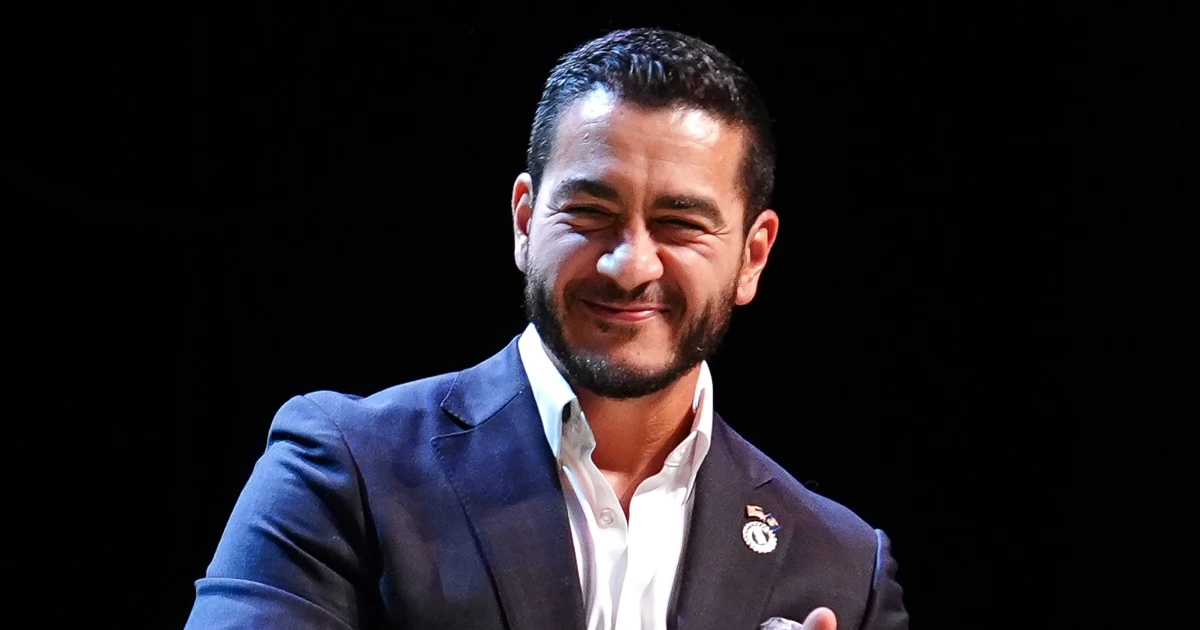
Abdul El-Sayed has won Michigan’s bruising Democratic Senate primary, NBC News projects, defeating Rep. Haley Stevens in a closely watched race that establishes a Midwest foothold for a progressive movement on the rise this midterm cycle. El-Sayed overcame nearly $65 million in outside spending and a Democratic establishment that had consolidated behind Stevens, including a late endorsement from popular Gov. Gretchen Whitmer, who stepped in last month in what was widely seen as a final attempt to slow his momentum. His victory amounts to the strongest sign yet that the insurgent populist energy that has already produced wins in blue states like New York and Colorado can take root in a purple battleground in the industrial Midwest.
El-Sayed, a former public health official who ran for governor in 2018, built his campaign around Medicare for All, opposition to corporate money in politics, and sharp criticism of U.S. military aid to Israel — positions that resonated in a state home to one of the country’s largest Arab American and Muslim American populations. He accused Israel of committing genocide against Palestinians in Gaza and repeatedly hammered Stevens for accepting donations from corporate PACs and benefiting from more than $30 million in advertising from a group affiliated with AIPAC. At a debate last week in Detroit, he dismissed her financial advantage bluntly, saying that if you need a $60 million crutch, you probably can’t be elected on your own terms. Senator Bernie Sanders and Rep. Alexandria Ocasio-Cortez rallied across the state for him, while the United Auto Workers also threw their weight behind his campaign.
Stevens, a four-term congresswoman, ran as the tested moderate with deep ties to Michigan’s business community and the party establishment. She aligned herself with Whitmer, retiring Sen. Gary Peters, and Senate Minority Leader Chuck Schumer, arguing she was the safer choice against Republicans come November. She frequently accused El-Sayed of being preoccupied with national progressive politics at the expense of bread-and-butter issues back home, an argument reinforced when audio leaked of El-Sayed telling donors that a win could reverberate into 2028 and inspire primary challenges against Democrats like Sen. John Fetterman of Pennsylvania. The race tightened considerably after state Sen. Mallory McMorrow dropped out last month, leaving voters with a starker ideological choice than the three-way contest had offered.
El-Sayed now advances to face former Rep. Mike Rogers, who secured the Republican nomination unopposed after an early endorsement from President Donald Trump helped clear the field. The November matchup is expected to be among the most competitive Senate races in the country and could determine which party controls the chamber. Republicans currently hold 53 seats, and while Democrats are targeting red states to flip the four they need, they must also defend battleground seats in Georgia and Michigan — two states Trump has carried twice. National Republicans have signaled they see El-Sayed as a preferable opponent, with the National Republican Senatorial Committee even running ads highlighting his progressive credentials and Sanders endorsement during the primary, a move many interpreted as an attempt to help push him into the general election.